


How Fashion Brands Are Transforming Fashion Photography into Museum Installations

Fashion photography has long been the primary visual language of magazines, campaigns, and advertising. Yet in recent years, this medium has undergone a profound transformation: no longer merely a tool to sell clothing, it is increasingly treated as a cultural artifact, curated and exhibited in museums and brand-run institutions. This shift signals a new understanding of fashion photography, positioning it as an expressive, narrative-driven form capable of engaging audiences beyond the ephemeral context of campaigns.
The migration from editorial pages to gallery spaces is not only a change in format but a redefinition of how we experience fashion visually and culturally. Photography that once existed primarily in commercial contexts is now leveraged as a vehicle for storytelling, brand heritage, and artistic exploration. For photographers, curators, and audiences alike, this evolution opens new avenues for engagement, critical reflection, and aesthetic innovation.
From Editorial to Exhibition: A Strategic Shift
The movement of fashion photography into galleries is not accidental. Fashion houses, recognizing the cultural value of their photographic archives, have sought to recontextualize campaigns as narrative experiences. Early examples include Helmut Newton exhibitions in the 1980s, where fashion images were presented in museum contexts, setting a precedent for treating editorial photography as art.
Contemporary brands have embraced this approach more fully. Armani/Silos, inaugurated in 2010, exemplifies how a fashion archive can be reimagined as a living museum. Giorgio Armani transformed a former industrial space in Milan into a venue where photography, garments, sketches, and video footage coexist, offering visitors a holistic view of the brand’s evolution. Here, photographs are not passive illustrations but central elements that guide narrative flow, evoke emotional resonance, and connect audiences to moments behind the runway and campaign shoots.
Similarly, Prada’s curated exhibitions explore the symbiotic relationship between photography and fashion heritage. By presenting both archival images and contemporary projects, Prada emphasizes photography as a medium of memory and storytelling, framing garments as artifacts within broader cultural narratives.
This strategic shift reflects a dual intention: preserve brand legacy and assert cultural authority. By positioning fashion photography as museum-worthy, brands claim a space in the cultural canon, elevating images from ephemeral commerce to lasting art.
Curating Immersive Narratives
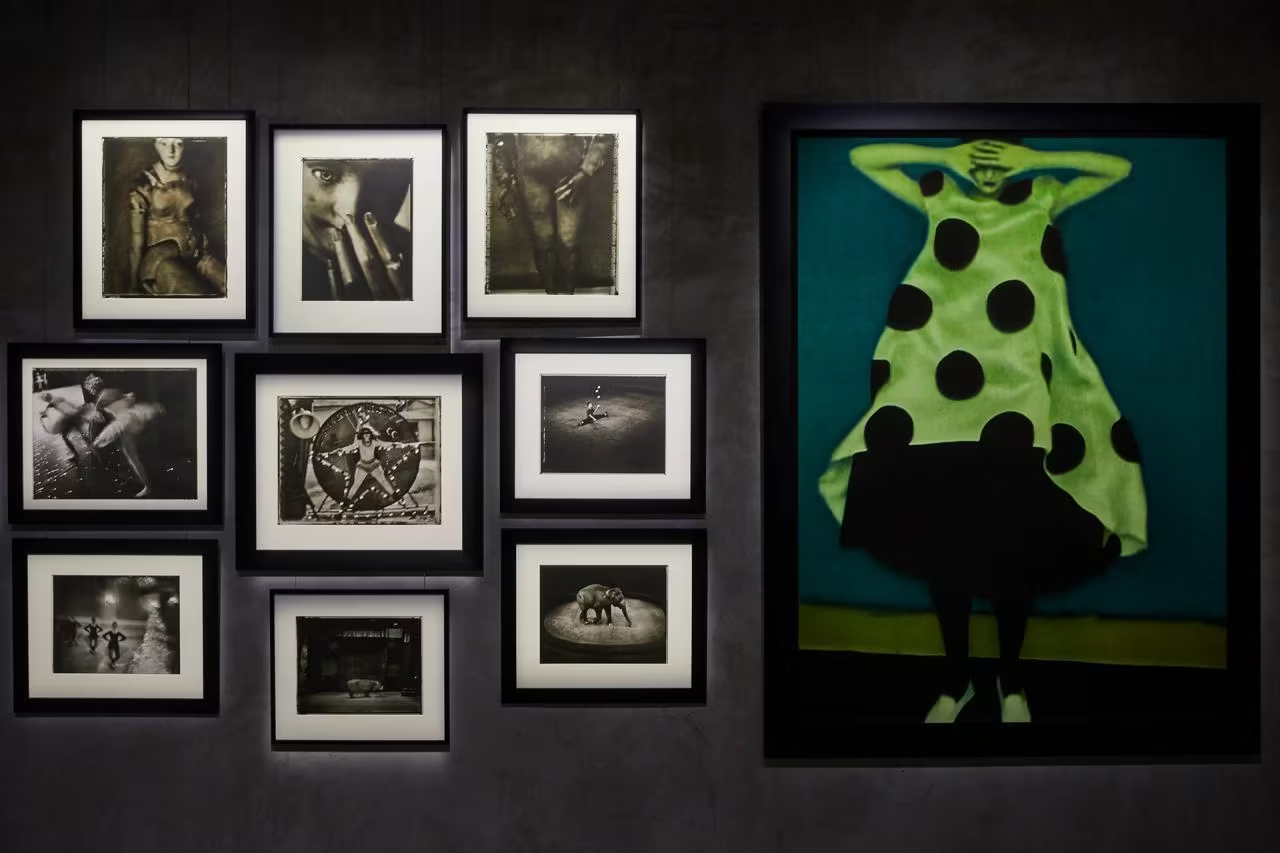
The challenge of presenting fashion photography in gallery settings lies in translating editorial intent into spatial experience. Exhibitions such as Sarah Moon’s “From One Season to Another” (2018–2019) at Armani/Silos demonstrate this with precision. Moon’s 170 photographs spanning four decades were organized non-linearly, inviting visitors to move through time and space, exploring motifs, color palettes, and narrative themes. The spatial arrangement emphasized rhythm and emotional cadence, transforming individual images into a cohesive, immersive story.
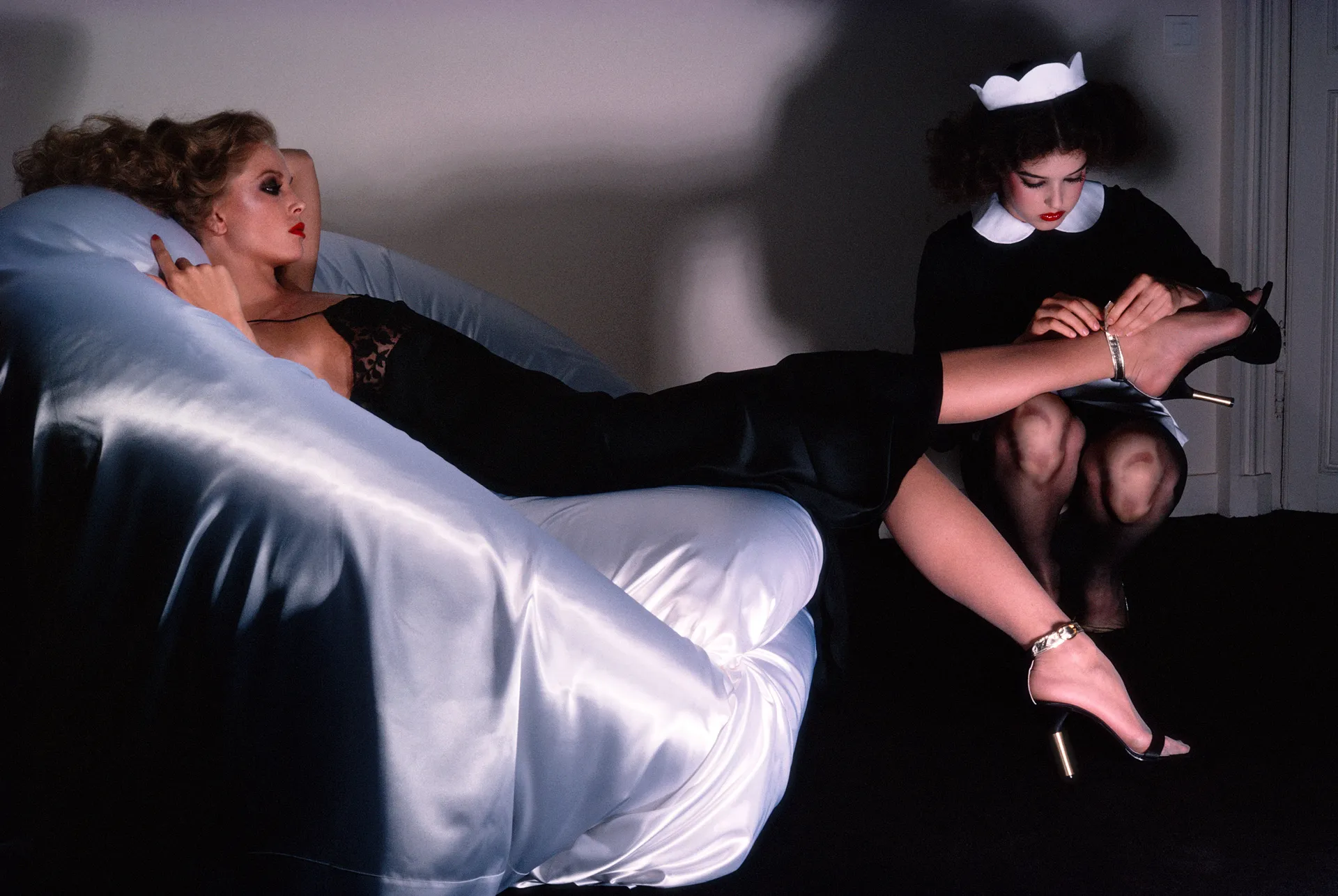
The 2023 retrospective “Guy Bourdin: Storyteller” exemplifies another approach: here, 100 photographs were organized by color and visual tone. Bourdin’s signature saturated hues and provocative framing were amplified by chromatic room design, creating an almost cinematic experience. Lighting, wall color, and print scale worked in tandem to reinforce mood, challenge perception, and elevate narrative impact.
In these cases, curators act as both storytellers and architects. Decisions regarding sequencing, print size, room layout, and light intensity all shape the audience’s cognitive and emotional experience. Photography is no longer static; it occupies space, interacts with viewers, and becomes part of a dynamic cultural dialogue.
The Cultural Stakes: Fashion as Heritage and Power
Exhibiting fashion photography is not merely an aesthetic exercise, it carries cultural, institutional, and political significance. By framing photographs as heritage objects, brands position themselves as cultural producers, asserting authority over style, taste, and memory. For photographers, this elevation offers validation and exposure, transforming commercial images into art that can be studied, critiqued, and preserved.
Yet this framing also introduces tension. Exhibitions must balance brand narrative with artistic integrity, navigating the fine line between cultural celebration and marketing. Questions emerge: are audiences engaging with the aesthetic and conceptual qualities of the work, or primarily with the brand mythos it promotes? Curators must negotiate these competing objectives while ensuring that the work resonates beyond its commercial origin.
Audience reception further complicates this dynamic. Observers may respond differently to a photograph in a gallery context than in a magazine: the slower pace, the scale, and the controlled lighting allow for more contemplative and critical engagement, highlighting nuances that may be lost in print.
Challenges of Translating Ephemera into Objects
Editorial images are inherently ephemeral, tied to campaigns and trends. Exhibiting them requires technical and logistical rigor. Archival printing methods—C-prints, inkjet on cotton rag, or baryta-coated papers—preserve color fidelity and image sharpness, while gallery lighting (controlled lux levels, color temperature, diffusion) ensures consistent visual impact. Print scale, wall spacing, and narrative sequencing further influence perception, demanding careful curatorial planning.
Beyond technical considerations, curators must address conceptual challenges: maintaining a coherent narrative, balancing brand heritage with artistic expression, and ensuring visitor engagement. The goal is to create an experience where the images speak independently, yet collectively form a story that communicates both historical context and cultural relevance.
Looking Ahead: A Personal Reflection
As fashion photography increasingly migrates to gallery spaces, it challenges us to reconsider the medium’s role. These exhibitions are immersive, inviting audiences to engage with fashion not merely as commerce but as cultural and artistic expression.
For photographers and visual storytellers—especially those documenting ephemeral backstage moments or producing lookbooks, where light, immediacy, and atmosphere are paramount—this shift is inspiring. It encourages reflection on how composition, lighting, and spatial narrative can transcend editorial confines, resonating in space and time.
For audiences, gallery exhibitions provide a rare opportunity to see images as ideas, emotions, and cultural statements, rather than mere product visuals. Ultimately, the transition from editorial to exhibition underscores the power of fashion photography to shape imagination, provoke reflection, and leave a lasting cultural imprint, while emphasizing the technical and artistic expertise required to preserve these fleeting moments.